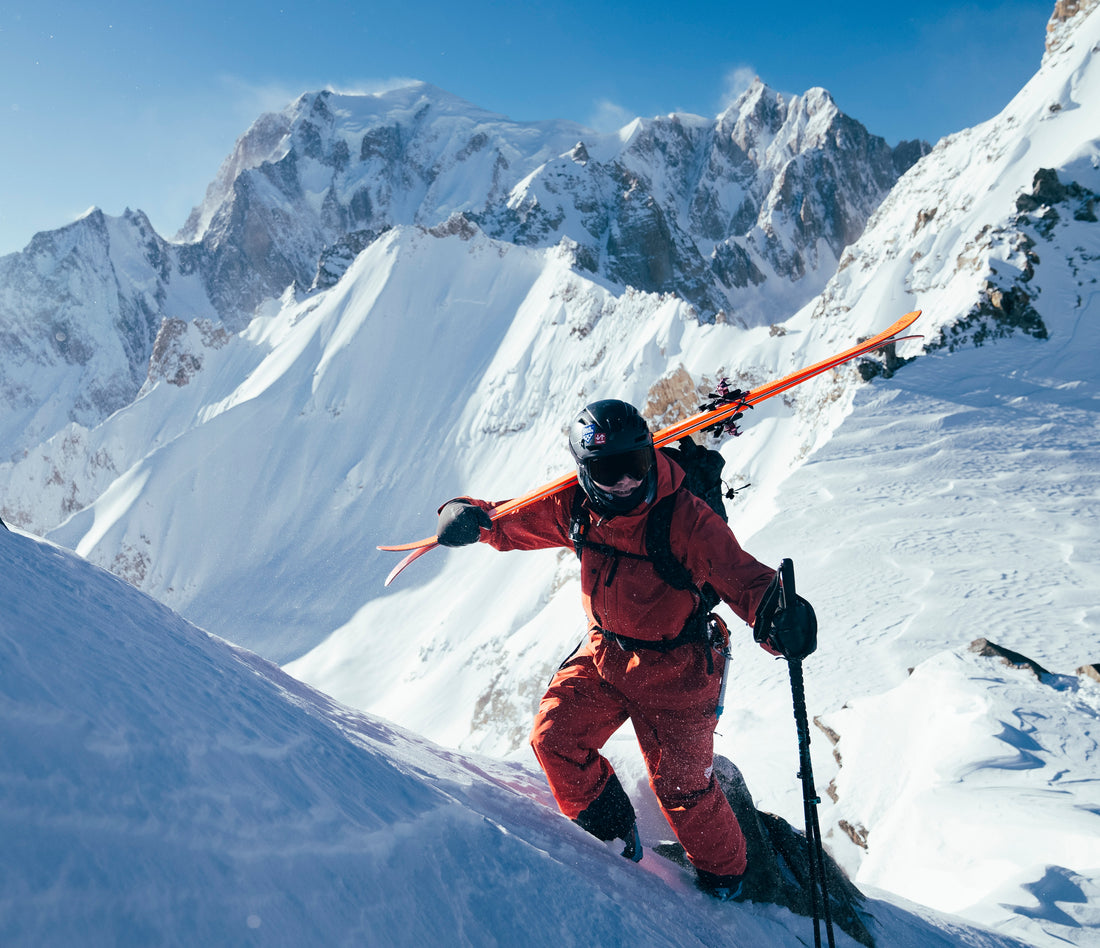
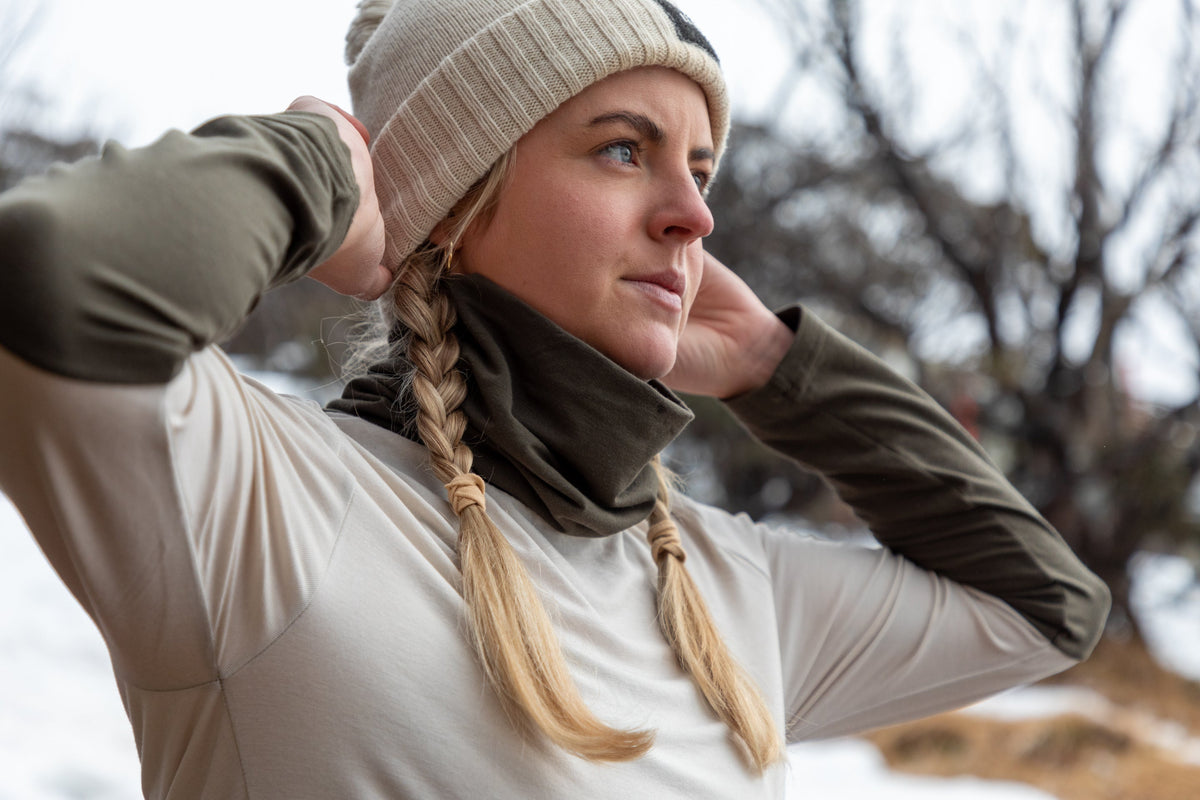
Your base layer is the piece of ski gear you'll think about least and rely on most. It sits against your skin all day, manages your sweat, and decides whether you're warm and dry or cold and clammy by the afternoon.
Here's how to choose the right one.
What does a ski base layer actually do?
A base layer has two jobs: move moisture away from your skin, and help regulate your temperature. Skiing is constantly swapping between hard work on the way down and sitting still on the chairlift. A good base layer keeps you comfortable through both.
Why merino is the best base layer for skiing
- Temperature regulation. Merino keeps you warm when you're cold and breathes when you're working hard.
- Stays warm when damp. Unlike cotton, merino keeps insulating even when you've been sweating.
- Odor resistance. You can wear it for multiple days without it smelling, which is ideal for ski trips.
- Soft, non-itch feel. Our Signature Merino Blend™ combines merino with bamboo rayon for a softer feel against the skin.
Synthetic base layers dry faster and are usually cheaper, but they hold onto odor and are less comfortable across a wide temperature range. For skiing, merino is the better call.
Base layer weights explained
Base layer weight refers to how dense the fabric is, measured in grams per square meter (gsm). Heavier fabric is warmer.
Lightweight (around 200gsm)
Our best-selling weight for good reason. Lightweight base layers are breathable, versatile and easy to layer. Best for spring skiing, touring, high-output days, or if you run hot.
Mens Lightweight Crew · Womens Lightweight Crew
Midweight (around 260gsm)
The all-rounder for most ski days. Noticeably warmer than lightweight while still breathing well. If you're only buying one base layer for skiing, this is it.
Mens Midweight Crew · Womens Midweight Crew
Heavyweight Grid Fleece (around 280gsm)
Our warmest base layer. The grid fleece structure traps warm air in its channels while still letting moisture escape. Best for very cold days, deep Hokkaido cold, riders who run cold, or long days on slow chairlifts. It also works as a light mid layer.
Mens Heavyweight Grid Fleece Crew · Womens Heavyweight Grid Fleece Crew
Want to go deeper on heavyweight? Read Surviving the Freeze.
Quick guide: which weight should you choose?
- You run hot, or ski in spring: Lightweight
- Most resort ski days: Midweight
- Japan, Canada, mid-winter storms or you run cold: Heavyweight Grid Fleece
- Not sure: Midweight, with a mid layer you can add or remove
Don't skip the base layer bottoms
Most people buy a base layer top and forget the bottoms. But your legs spend the whole chairlift ride pressed against cold, wet ski pants. A pair of merino base layer bottoms makes a much bigger difference than most people expect.
Mens Heavyweight Grid Fleece Bottom · Womens Heavyweight Grid Fleece Bottom · Womens Midweight Bottom
How should a ski base layer fit?
Close to your skin, but not tight. A base layer can only move moisture if it's touching your skin, so a loose fit won't work as well. It should feel snug without restricting your movement, and the sleeves and legs shouldn't ride up when you move.
One more tip: tuck your base layer bottoms above your boots, not inside them. Only your ski socks should go in your boots.
Building the full system
Your base layer is step one. Add a breathable mid layer and a waterproof outer, and you've got a system that handles anything. Read our full guide to choosing the perfect base layer system, or learn what a mid layer is.
Shop mens base layers → · Shop womens base layers →
Frequently Asked Questions
What is the best base layer for skiing?
A merino or merino blend base layer is best for skiing. It regulates temperature, stays warm when damp and resists odor, so you can wear it for several days in a row.
Should I get a lightweight or midweight base layer for skiing?
Midweight suits most ski days. Choose lightweight if you run hot or ski in spring, and heavyweight if you ski in very cold conditions or feel the cold.
Do I need base layer bottoms for skiing?
Yes. Base layer bottoms keep your legs warm on cold chairlifts and help manage moisture under your ski pants.
Is merino better than synthetic for base layers?
For skiing, yes. Merino regulates temperature better and resists odor. Synthetic dries faster and is cheaper, but holds onto smell after a day or two.
How tight should a base layer be?
Snug against the skin without restricting movement. A base layer needs skin contact to wick moisture effectively.